Implementing a Shared Narrative for Lasting Change

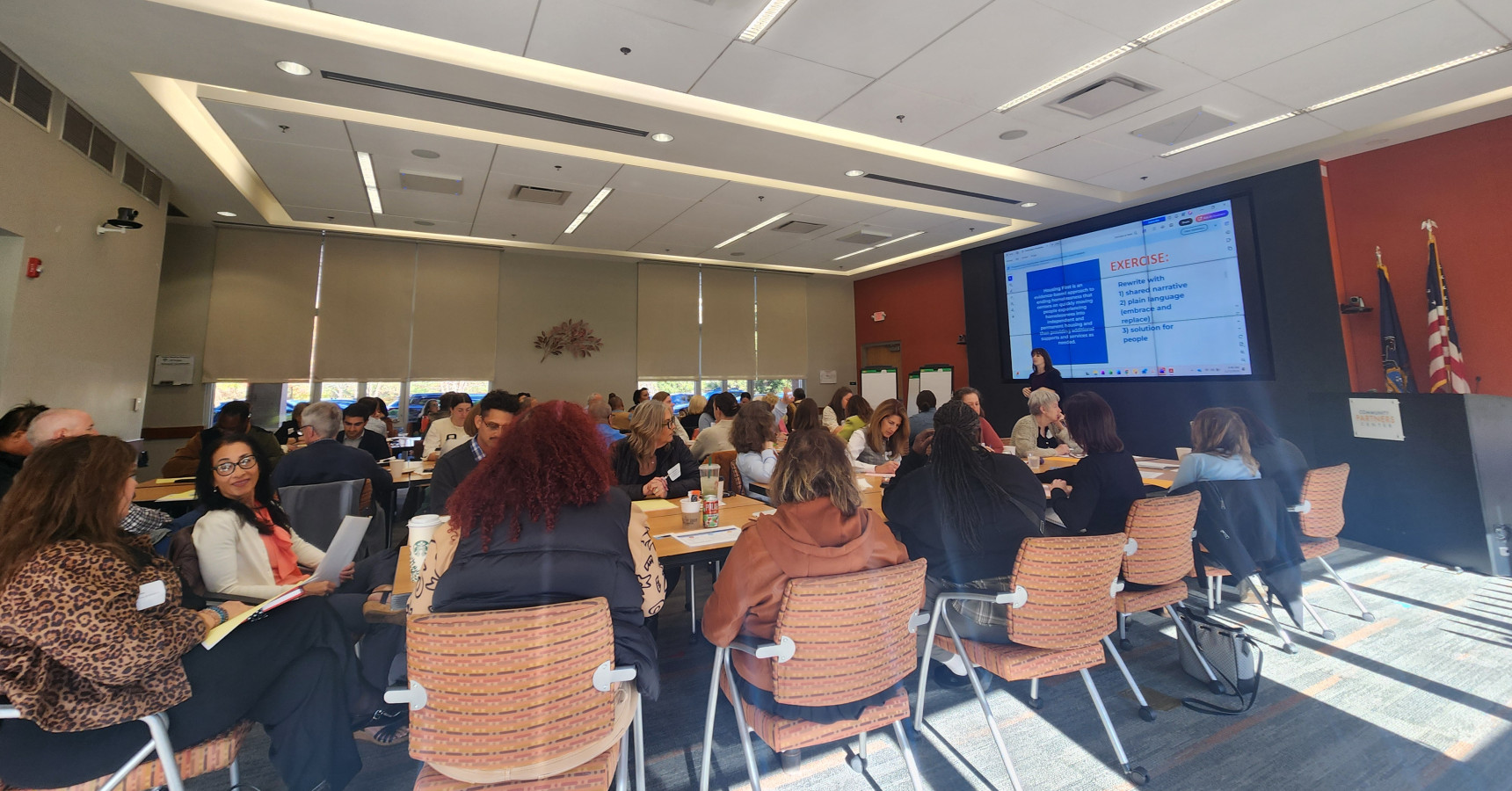
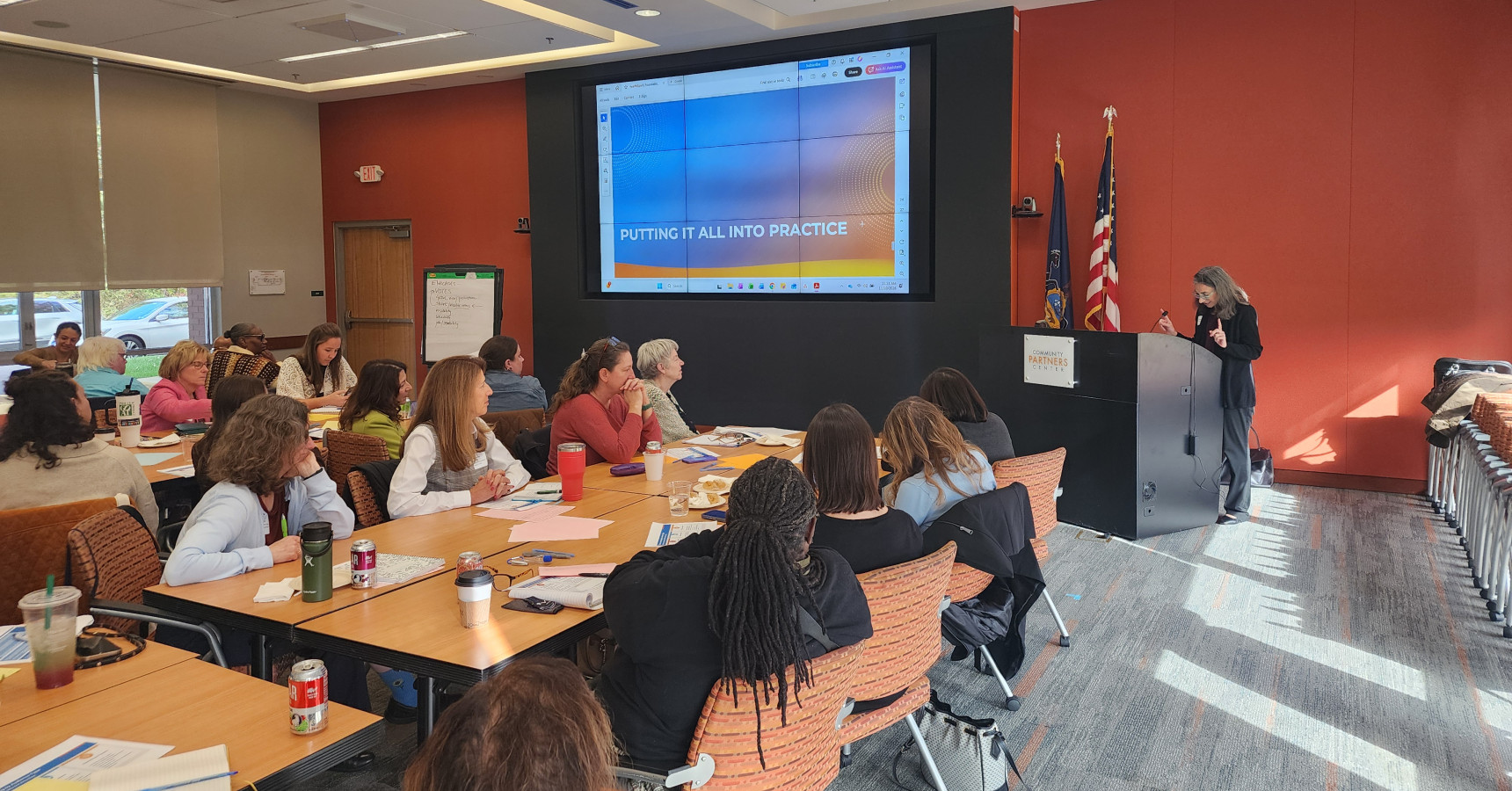
Last week HealthSpark Foundation welcomed partners from across the county to the Community Partners Center in Colmar for Part II of Shifting the Narrative: A Housing Justice Community of Practice. Facilitated by Sarah Armour, Deputy Director of Housing Narrative Lab, and in partnership with Montgomery County’s Office of Housing & Community Development and Bucks-Mont Collaborative, this second session invited participants to develop, test, and practice human centered and solutions-oriented housing justice narratives.
Read a recap of part one: https://healthspark.org/news/recap-shifting-narrative-housing-justice-community-practicein
Background and Research
To set the stage, Sarah drew from national research conducted in May 2026 by Housing Narrative Lab with Voss Research and Strategy and Grow Progress. This three-phased research sought to understand how Americans are navigating the housing affordability crisis, identify the solutions they would like to see, and develop effective messaging that would drive support towards those solutions.
Key research findings and takeaways:
- Three out of five (59 percent) of Americans are personally worried about paying their rent or mortgage. Concerns are even more acute for renters, younger generations and Black and Latino adults.
- Sky-high cost of housing has become a common problem across the US, even for those earning significant incomes. Nearly half of all adults (47 percent) describe housing as “not affordable at all.”
- If faced with a $200 increase in their housing costs starting next month, more than half (56 percent) would not be able to pay it with the money they currently have.
- People are making trade-offs and foregoing other necessities to pay for rising housing costs, such as not getting the health care they need, saving for retirement or being able to pay unexpected expenses.
- Affordability is the bridge that connects housing issues across the country, from solving street homelessness and enacting renter protections, to expanding rental assistance and increasing homeownership.
- Americans want solutions. People overwhelmingly favor a range of policies to make renting or buying a home or paying a mortgage more affordable.
Narratives and Messaging
Narratives, as Sarah reminded participants, influence and define who we are, what we believe, and how we act. A collection of stories, narratives are conveyed in policy, politics, news media, pop culture, and around the dinner table. They can be powerful strategies used to perpetuate systems of harm and inequity, or to build and amplify collective power rooted in justice, equity, and belonging. Humans communicate through stories rather than cold data, and stories activate the brain and build trust, connection, and relationships and motivate people into action.
In part one of this two-part series Sarah guided participants through the development of a shared housing justice narrative. Collectively, the group agreed upon: ‘We all do better when everyone has a place to call home.’ Using this shared narrative in part two, participants worked through scenarios and practiced building the narrative musculature necessary for growing public support for housing justice.
Housing Narrative Lab developed a few guiding principles to keep in mind while crafting narratives to drive public support toward housing justice solutions:
- Lead with shared values: Messages anchored in the idea that housing is foundational to our lives resonate. Talk about housing as “a foundation” to stability and that everyone needs a “safe, stable place to call home.”
- Name the problem and the trade-offs: Illustrate the magnitude of housing costs by showing the choices and trade-offs people are being forced to make — like skipping their prescription drugs — to keep a roof over their heads.
- Name the cause and tell personal stories: Make concepts about systemic challenges concrete by showing, through personal stories, how policy decisions, discrimination and other factors play out in people’s lives. Be specific about who or what has created the system that is not working. For example, “corporate investors are the problem” is vague. “Corporate investors buy up homes, outbid families and raise rents” is specific.
Practicing Deep Listening and Curiosity
Before folks broke for lunch, Bucks-Mont Collaborative Executive Director Kristyn DiDominick invited participants to practice persistent listening and curious questions in their advocacy and housing work. Kristyn noted: “to change narratives, we need to connect to someone else’s values. This requires deep and persistent listening – across differences and discomfort. It also requires curious questions to better understand others.”
Audience and Asset Framing
After lunch, the group reconvened to explore asset framing and workshop messaging for diverse audiences.
Understanding the audience is crucial to building public support for lowering housing costs for everyone. When tailoring messaging it is helpful to consider who the audience is, what they believe, and what they care about. Effective messaging leads with the aspirations of the target audience, emphasizes what they care about, provides clear solutions, and is collaborative rather than competitive in tone. Sarah shared insights into the differing priorities of elected and non-elected government officials, business leaders, philanthropic funders, for profit and non-profit housing developers, service providers, and collaborated with participants to tailor messaging.
Closing
Housing intersects with social issues and outcomes, from education and health to employment and public safety and the security of housing is critical to well-being and health equity. High housing costs force families to make trade-offs between other basic needs like nutrition, health care, and geographic location in relation to work. The burden is particularly significant for low-income and families of color. When we can skillfully articulate the benefit of lowering the cost of housing for everyone by leading with shared values, centering and humanizing people, and focusing on positive outcomes over processes, we build our capacity to grow public support and move people into action.
As the half day community practice ended, Sarah invited participants to begin incorporating the messaging strategies into their everyday lives – over the dinner table, at holiday gatherings, community events, and public meetings.
Healthy, equitable, and hopeful communities are possible when we work from a shared vision. Stay tuned for more upcoming convenings – including the Housing Summit in spring 2027.